
Key takeaways
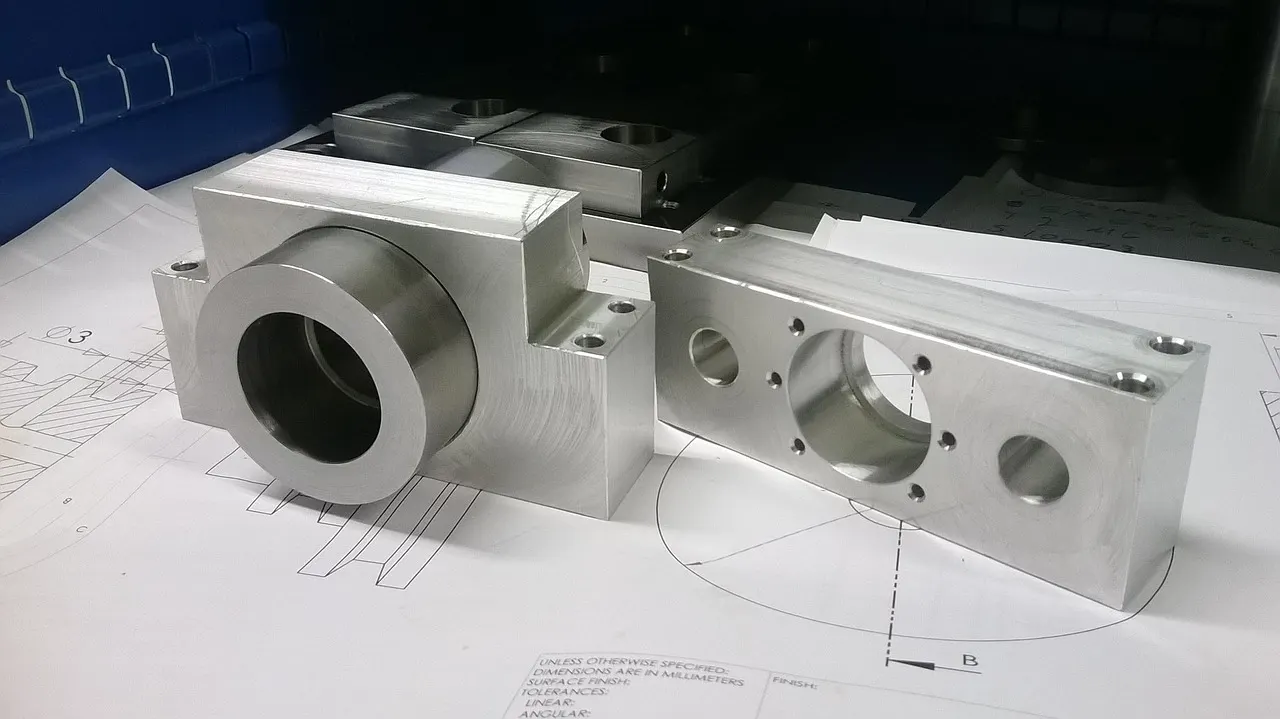
- Send a 2D drawing with GD&T plus a STEP file; ambiguous tolerances are the main cause of quote delays.
- Specify only the tolerances the part actually needs — tighter bands raise unit price across every process.
- Ask for the inspection report format before ordering, not after the first parts arrive.
- Confirm which subcontractors a supplier uses for heat treatment and surface finishing.
- No-MOQ suppliers exist; volume pricing still starts where setup cost is amortized.
Getting custom metal parts made in China starts with one thing: a complete RFQ package. That means a 2D drawing with tolerances and a 3D model, a material grade, a surface finish, a quantity and a target date. Suppliers quote in 24 hours when they have those inputs. When they do not, they guess, and the guess becomes a change order later.
This guide covers what you need to decide before you contact a factory. It walks through process selection, tolerance strategy, cost drivers and supplier auditing, in the order a sourcing project usually moves.
JX Manufacturing (JINXIN PRECISION TECHNOLOGY CO., LTD.) runs CNC machining, sheet metal fabrication, die casting and related processes from a factory in Dongguan, Guangdong. The workflow below reflects how those quotes are actually built.
Match the process to the part before you request quotes
Process choice sets your tooling cost, your achievable tolerance and your lead time. Choosing it after the quote stage means comparing prices for parts that were never equivalent.
CNC machining suits low-to-mid volumes, complex geometry and tight tolerances without tooling. Sheet metal fabrication suits enclosures, brackets and chassis where flat patterns and bends define the part. Die casting suits higher volumes of a stable design, because the mold is a fixed cost you amortize. Vacuum casting suits prototype runs in urethane. Gear machining covers transmission parts where tooth geometry is the critical feature.
Here is how the common metal processes compare on the variables buyers ask about first.
| Process | Typical volume fit | Tooling required | Best for |
|---|---|---|---|
| CNC machining | Prototype to mid volume | No hard tooling | Complex geometry, tight tolerances, metal and plastic |
| Sheet metal fabrication | Prototype to high volume | Laser and press programs | Enclosures, brackets, chassis, mounting plates |
| Die casting | Mid to high volume | Steel mold | Thin-wall housings with repeatable geometry |
| Vacuum casting | Low volume | Silicone mold | Prototype housings before hard tooling |
| Gear machining | Low to mid volume | Fixtures and cutters | Transmission and drive components |
What to put in the RFQ package
A supplier cannot quote what the drawing does not state. Build the package once and reuse it for every factory you compare.
- 3D model in STEP or IGES, exported from the native CAD file.
- 2D drawing with dimensions, GD&T callouts, datum scheme and general tolerance block.
- Material grade written as a standard designation, such as 6061-T6 or 304 stainless, not a trade name.
- Surface finish with a spec: anodize type and thickness, powder coat color and gloss, or passivation.
- Quantities for prototype, pilot and production, so setup cost can be spread correctly.
- Inspection requirements: first article report, critical dimension list, material certs.
- Target date and shipping destination, since freight mode changes the plan.
Mark critical-to-quality features on the drawing. Suppliers price inspection effort against those callouts, and an unmarked drawing gets a generic inspection plan.
How tolerances affect price and inspection
Tolerance is the single largest lever on machined part cost after material. A general tolerance block of plus or minus 0.1 mm on a CNC part is routine. Asking for plus or minus 0.01 mm on the same feature changes the machine, the fixturing, the number of setups and the inspection time.
Apply tight tolerances only where the assembly needs them. A mounting hole pattern needs position control. A cosmetic outer edge usually does not. Buyers who tighten everything pay for capability they never measure.
Inspection should be agreed in writing before production. A workable baseline for custom metal parts includes:
- First article inspection on the initial parts, with a ballooned drawing and recorded values.
- CMM reports for critical dimensions, tied to the datum scheme on the drawing.
- Material and finish certificates traceable to the heat or lot.
- A defined AQL sampling plan for production lots, agreed per feature class.
- Photographs and measurement records shipped with the parts, not on request.
Ask which measuring equipment the factory owns. A supplier with in-house CMM capacity controls its own schedule. A supplier that outsources inspection adds a queue between machining and shipping.
What drives the cost of custom metal parts
Unit price is a function of a few identifiable inputs. Understanding them lets you negotiate on the right variable instead of pushing for a blanket discount.
Material. Grade and stock form matter. A part cut from plate wastes more material than one cut from bar or extrusion. Aluminum 6061 is generally easier to source than specialty alloys, which carry mill lead times.
Setup and tooling. CNC setup is a fixed cost per order, so small batches carry a higher unit share. Die casting molds are a larger fixed cost that only pays back at volume.
Geometry and setups. Each additional fixturing orientation adds labor and error risk. Five-axis capability or a well-designed part reduces the number of setups.
Tolerance and inspection. Tight bands and full CMM reporting add machine time and inspection hours, as covered above.
Surface finish. Anodizing, powder coating and passivation are usually subcontracted. That adds a transport leg and a queue, and it is a common source of schedule slip.
Quantity and freight. Volume spreads setup cost. Freight mode trades cost against transit time, and air freight on a small prototype order is often cheaper than a week of delay.
Lead time: what is realistic
Quotes within 24 hours are achievable when the RFQ package is complete. Production lead time then depends on process, material availability and finishing.
Machined parts from stock material move fastest. Cast or heavily finished parts take longer because the mold, the mill order or the anodize line sets the pace. Global delivery in as few as 3 days is possible on expedited freight, but plan the schedule around production, not around the fastest shipment you have seen.
Ask for the lead time broken into stages: material procurement, machining, finishing, inspection and dispatch. A single number hides where the delay will appear.
How do you choose and audit a metal parts supplier in China?
Audit the process, not the brochure. Start with documents, then verify them against the floor.
- Business license and export history. Confirm the legal entity name matches the invoice and the bank account.
- Process list and equipment. Ask which operations are in-house and which are subcontracted.
- Quality system. Request the certificate number and the scope, and check the scope covers your process.
- Sample part. Order a paid sample and measure it yourself against the drawing.
- Inspection records. Review a real first article report from a comparable part, with the drawing it refers to.
- Communication. Note response time and whether engineering questions come back as questions or assumptions.
- Video or on-site walkthrough. Ask to see the machines that will run your part.
For higher-value programs, a third-party inspection at the factory before shipment adds independent confirmation. It costs less than a rejected lot sitting in a warehouse.
Next step
Sourcing custom metal parts from China is a documentation exercise before it is a negotiation. A complete drawing package, a tolerance strategy tied to function, and a supplier whose inspection process you have seen will do more for your schedule than a lower unit price.
JX Manufacturing quotes within 24 hours with no minimum order quantity. Upload your CAD files and 2D drawings to start an RFQ, and state your critical dimensions and target date in the request.
FAQ
How do I get custom metal parts made in China?
Prepare a 2D drawing with tolerances and GD&T, a STEP model, the material grade, surface finish, quantities and a target date. Send that package to two or three factories for comparison. Suppliers with in-house machining can quote within 24 hours when the inputs are complete. Then order a paid sample and measure it before production.
What is the minimum order quantity for custom metal parts from China?
It depends on the supplier and the process. Many CNC machine shops accept single-digit prototype quantities because no hard tooling is needed. Die casting and injection molding carry mold costs, so they only make sense at higher volumes. Some manufacturers, including JX Manufacturing, quote with no MOQ, though unit price falls as setup cost is spread.
How long does it take to manufacture custom metal parts in China?
Quotes typically return within 24 hours for a complete RFQ package. Production time depends on the process, material availability and finishing. Machined parts from stock material are fastest, while cast parts and subcontracted anodizing or coating add queue time. Ask for lead time broken down by stage so you can see where delay risk sits.
What tolerances can Chinese machine shops hold?
General machining tolerances around plus or minus 0.1 mm are routine for CNC work. Tighter bands down to plus or minus 0.01 mm are achievable on selected features, but they raise cost through fixturing, extra setups and inspection time. Specify tight tolerances only on features the assembly requires, and ask for a CMM report on those dimensions.
How do I verify quality before shipping from a Chinese supplier?
Agree the inspection plan in writing: first article inspection, CMM reports on critical dimensions, material and finish certificates, and an AQL sampling plan for production lots. Request records with the shipment. For larger programs, book a third-party pre-shipment inspection at the factory, which is cheaper than rejecting a lot after it arrives.