
Key takeaways
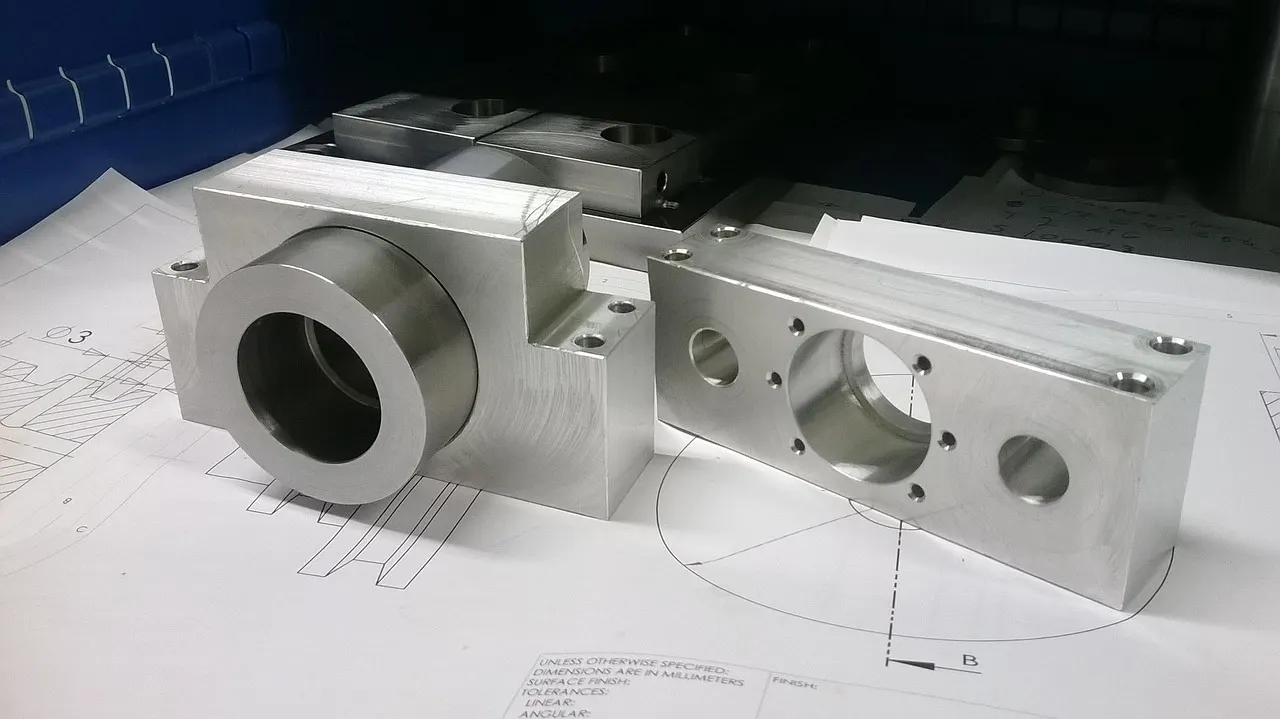
- Choose CNC machining for low volume, tight tolerances and fast design iterations.
- Choose injection molding when per-part cost matters more than tooling cost at volume.
- Tooling lead time, not molding cycle time, usually sets the project timeline.
- Ask for a tolerance report and material certificates before approving a supplier.
- Send a drawing with critical dimensions marked so quotes are comparable.
CNC machining vs injection molding is rarely a question about which process is better. It is a question about which process fits your part, your volume and your deadline. A machined aluminium bracket and a molded ABS housing can serve the same function, but they carry different cost structures and different risk.
This guide covers what you need before you send a request for quote: process capability, achievable tolerances, material options, cost drivers, lead time and how to check a supplier. It is written for design engineers and sourcing leads comparing quotes from more than one source.
JX Manufacturing runs both processes under one roof in Dongguan, Guangdong. That matters for comparison, because the same drawing can be quoted for CNC machining and for injection molding without translating tolerances between suppliers.
Process capability: what each method does well
CNC machining removes material from a solid block using milling, turning or a combination. It suits parts with tight tolerances, complex geometry in three axes, and low to medium quantities. There is no tooling to cut, so the first part can be produced as soon as the program is proven.
Injection molding melts polymer pellets and injects them into a steel or aluminium mold cavity. It suits parts that repeat at volume with consistent geometry. The mold is the main investment, and it must be built before the first saleable part exists.
Both processes can produce the same part in many cases. The decision usually turns on three variables: quantity, tolerance and how settled the design is.
CNC machining vs injection molding: comparison table
The table below summarises the practical differences that affect a sourcing decision. Treat the tolerance ranges as typical starting points, not guarantees; the drawing and material set the real limit.
| Factor | CNC machining | Injection molding |
|---|---|---|
| Typical economic quantity | Prototypes to a few thousand parts | Thousands to millions of parts |
| Tooling required | None; fixturing only | Steel or aluminium mold |
| Typical tolerance | ±0.05 mm on metals, tighter on request | Driven by mold and material; shrink must be compensated |
| Material range | Aluminium, steel, stainless, brass, engineering plastics | Thermoplastics, elastomers, filled grades |
| Design change cost | Edit the program | Modify or rebuild the mold |
| Surface finish | As-machined, bead blast, anodize, plating | From the mold texture; secondary painting possible |
| Lead time driver | Programming and machining hours | Mold build, then cycle time |
Cost drivers you should model before quoting
Machining cost scales with removed volume and setup count. A part that needs five setups costs more than one that needs two, even if the finished geometry looks similar. Harder metals cut slower, and thin walls force lighter passes.
Molding cost splits into tooling and piece price. Tooling depends on cavity count, steel grade, surface texture and how many slides the geometry needs. Piece price depends on cycle time, material grade and scrap rate. A single-cavity mold keeps tooling low but raises piece price; a multi-cavity mold does the reverse.
The break-even point is where the tooling investment divided by the volume falls below the machining cost per part. Model it with your own quantities, not with a general rule. Volume estimates that are too optimistic are the most common reason a molding project loses money.
- Count the setups and fixturing hours in a machining quote.
- Ask whether the mold price includes a trial run and first-article report.
- Check whether material grade is specified or left open.
- Confirm who owns the mold and where it is stored.
- Ask for the piece price at two or three volume tiers.
Materials, tolerances and quality inspection
Machined parts hold tolerances directly from the machine. Measure critical features with a coordinate measuring machine, and check surface roughness where a seal or bearing seats. For metals, material certificates trace the heat and grade.
Molded parts carry shrinkage, warpage and gate marks. Tolerance must account for material shrink, which varies by grade and fiber content. Critical dimensions should be agreed before tooling starts, because changing them later means cutting steel.
Inspection for both processes should follow a documented plan. A first-article inspection report confirms the first parts against the drawing. In-process checks catch drift during a run. Final inspection confirms the lot before packing.
Ask for the inspection plan with the quote. A supplier who cannot describe how a dimension is measured has probably not planned for it.
Lead time: where the schedule actually goes
Machined parts move quickly once the program is proven. Programming, setup and cutting dominate, and a revision costs hours rather than weeks. This is why machining suits design iteration.
Molding lead time is dominated by tooling. Design, steel ordering, machining, trial and correction can take weeks before the first good part. Once the mold runs, cycle time is short and output is high. Plan the tooling phase separately from production.
JX Manufacturing quotes within 24 hours and delivers globally in as few as 3 days for processes where tooling is not the constraint. For molded parts, ask for a tooling schedule with milestone dates, not a single delivery date.
How do I choose and audit a supplier for these processes?
Start with capability fit. A shop that machines well may not build molds well, and the reverse is also true. Ask which process the supplier runs in-house and which is subcontracted.
Then audit the evidence. Request recent inspection reports, material certificates and a sample of parts in a comparable material. Ask how nonconforming parts are handled and who signs the deviation.
- Confirm the process is in-house, not brokered.
- Ask for tolerance capability on the specific feature, not a general claim.
- Request a first-article inspection sample.
- Check mold ownership and maintenance terms in writing.
- Confirm the quote states material grade, finish and inspection level.
- Ask for the escalation contact if a lot fails inspection.
A supplier that answers these questions in writing is easier to hold to a schedule. Vague answers usually become schedule problems later.
When to switch between the two processes
Many programs start in CNC machining and move to injection molding once the design is stable and volume is confirmed. Machined prototypes prove fit and function before tooling money is spent. The same drawing then becomes the mold specification.
The reverse also happens. A molded part that needs a fast design change may be machined in small quantity to keep a build on schedule while the mold is corrected. Keeping both processes with one supplier shortens that loop.
If your volume is uncertain, machine first. If your volume is committed and the geometry is final, model the molding economics with real numbers.
Next step
Send your drawing with critical dimensions, material grade and target quantity marked. JX Manufacturing will quote CNC machining and injection molding options so you can compare them on the same basis. Upload your CAD file or request a quote and we will respond within 24 hours.
FAQ
Is CNC machining cheaper than injection molding?
For low quantities, usually yes. CNC machining has no tooling cost, so the first part is affordable. Injection molding carries a mold investment that only pays back at higher volume. The break-even depends on part size, cavity count and material. Model both quotes at your real annual volume before deciding.
What quantity makes injection molding worth the tooling cost?
There is no universal number. Small simple parts can justify tooling at a few thousand units, while large parts with slides may need much higher volume. Divide the mold cost by the volume and compare that figure with the machining piece price. If the difference is small, keep machining until volume is confirmed.
Can I get prototypes machined before committing to a mold?
Yes, and it is the usual path. Machine a small batch to prove fit and function, then use the approved drawing as the mold specification. This reduces the risk of cutting steel for a design that still changes. Keep the prototype dimensions documented so the molded part can be compared against them.
What tolerances can injection molding hold?
Molded tolerances depend on material shrink, wall thickness and gate location. They are generally looser than machined tolerances on the same feature. Critical dimensions must be agreed before tooling starts, because changing them after the mold is cut means reworking steel. Ask the supplier to state the tolerance for each critical feature in writing.
How do I check a supplier's quality control before ordering?
Request a first-article inspection report, material certificates and a sample of parts in a comparable material. Ask how the supplier measures critical features and how nonconforming parts are handled. Confirm the quote states material grade, finish and inspection level. A supplier that answers in writing is easier to hold to a schedule.