
Key takeaways
- Keep the minimum bend radius at or above the material thickness to avoid cracking.
- Design holes at least one material thickness from any bend line.
- Specify general tolerances on the drawing, then call out only critical features.
- Laser cutting holds tighter tolerances than plasma on thin gauge stock.
- Ask suppliers for first article inspection reports before approving production.
Good sheet metal parts are designed before the first cut is made. The drawing decides how the part forms, how it is inspected and what it costs. Most quoting delays and rework come from a handful of design details that are easy to fix early.
These sheet metal fabrication design guidelines for beginners cover what a fabricator needs from you before quoting. That means process capability, tolerances, material grades, cost drivers, lead time and quality control. It also covers how to audit a supplier so you can compare quotes on equal terms.
JX Manufacturing runs sheet metal fabrication alongside CNC machining, injection molding and die casting at its Dongguan factory. The notes below reflect how a job is actually reviewed when a drawing arrives.
What the fabrication process can and cannot do
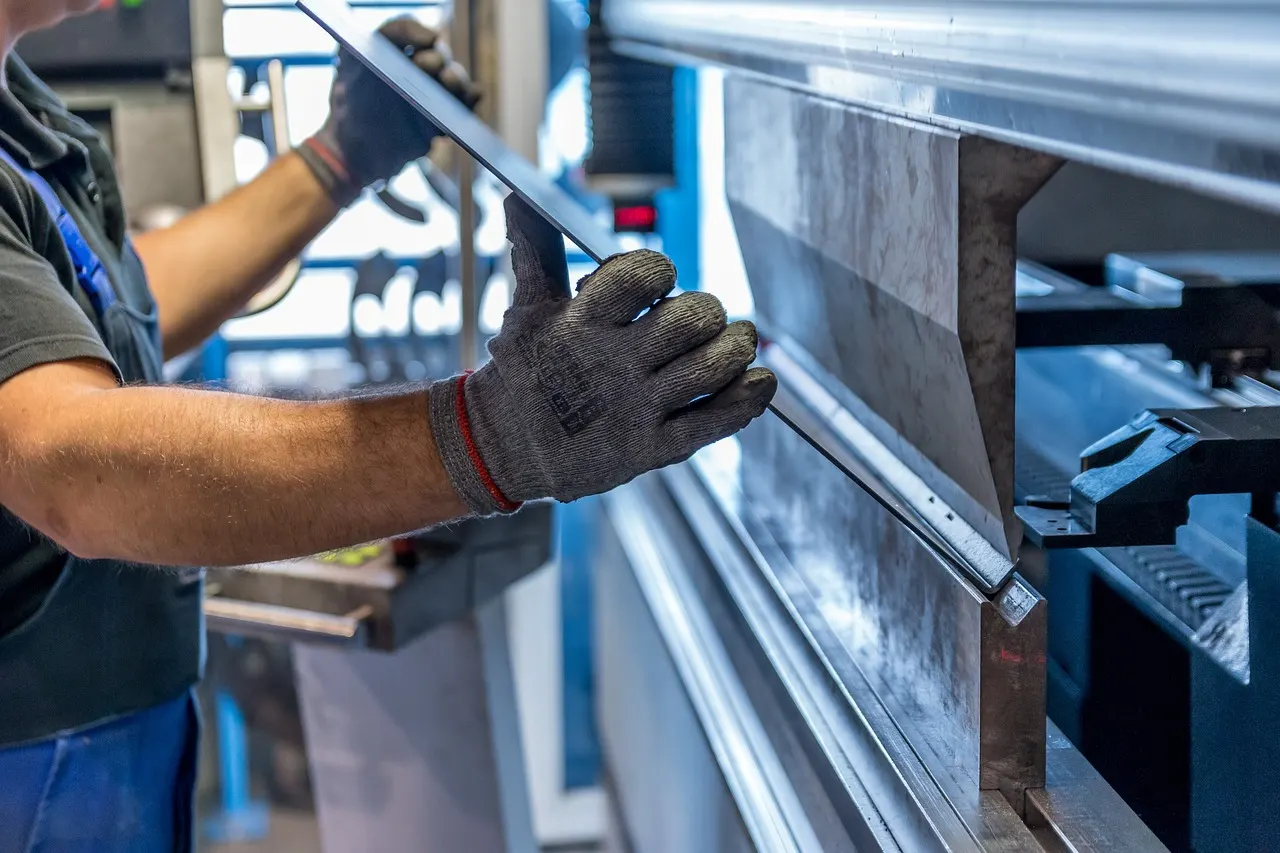
Sheet metal fabrication is a set of forming steps, not a single machine. Laser cutting or punching blanks the flat pattern. A press brake forms bends. Hardware goes in through insertion, riveting or welding. Finishing follows.
Each step has limits. Laser cutting handles intricate profiles in thin gauge well. Thick plate cuts more slowly and the heat-affected zone grows. Press brakes need clearance for the punch and die, so a bend close to a flange edge may need a different tool. Deep forms and tight reverse bends are where most designs fail.
Design for the flat pattern, not the finished 3D shape. The fabricator calculates bend allowances and the flat layout. If your model assumes sharp internal corners, the formed part will not match it.
Core design rules to apply first
- Keep the inside bend radius at or above the material thickness for mild steel and aluminium.
- Place holes and slots at least one material thickness away from a bend line.
- Make the minimum flange length at least four times the material thickness, or the brake cannot grip it.
- Avoid bends that overlap in the same area; the tooling will collide.
- Add relief notches at the ends of bends to prevent tearing.
- Keep hole diameter at or above the material thickness for punching.
- Group identical holes on one pitch so a single tool or program covers them.
Sheet metal fabrication tolerances and inspection
Tolerances drive cost faster than material choice. A general tolerance block covers most features. Reserve tight callouts for features that mate with something else.
Bend angle and bend location are the usual trouble spots. Formed parts accumulate variation across a sequence of bends. A general angular tolerance of around one degree and a linear tolerance of a few tenths of a millimetre are achievable in normal production. Anything tighter needs a conversation about tooling and inspection time.
Inspection should match the drawing. A first article inspection report confirms dimensions on the first part off the line. A coordinate measuring machine or a vision system checks hole positions and profiles. Callipers and height gauges handle simple linear checks. For cosmetic parts, a sample panel defines the acceptable finish.
Ask for the inspection plan with the quote. A supplier who cannot describe how a feature will be measured usually cannot hold it in production.
Choosing material and finish
Material choice sets strength, corrosion resistance, formability and cost. The table below compares common sheet grades and where each one fits.
| Material | Typical use | Formability | Notes |
|---|---|---|---|
| Cold-rolled steel (SPCC) | Brackets, chassis, enclosures | Good | Needs coating or plating to resist corrosion |
| Hot-dip galvanized steel | Outdoor housings, frames | Moderate | Zinc coating protects cut edges less well |
| Stainless steel 304 | Food equipment, medical housings | Moderate | Work hardens; tight bends need larger radii |
| Aluminium 5052 | Light enclosures, panels | Good | Good corrosion resistance, lower stiffness |
| Aluminium 6061 | Structural brackets | Fair | Stronger, but cracks at tight bend radii |
| Copper and brass | Busbars, shielding | Good | Higher material cost, good conductivity |
Finish follows function. Powder coating gives a durable colour finish. Zinc plating protects steel at low cost. Anodizing suits aluminium where wear and appearance matter. Specify the finish thickness, because it affects fit on mating parts.
What drives the cost of a sheet metal part
Cost comes from four places: material, machine time, labour and finishing. Material is priced by the sheet, so nesting efficiency matters. A part that leaves large offcuts costs more than its area suggests.
Machine time is set by cut length, hole count and the number of bends. Every additional bend adds a press brake setup and handling step. Parts that fit on one standard sheet and use one tooling setup quote lower.
Labour shows up in deburring, hardware insertion, welding and inspection. Tight tolerances add inspection time. Cosmetic requirements add handling and packing time.
Volume changes the picture. Tooling and programming cost is spread across the order, so small batches carry a higher unit price. JX Manufacturing quotes without a minimum order quantity, which lets you validate a design at low volume before committing to production.
Lead time and what affects it
Standard sheet metal work moves through programming, cutting, forming, hardware, finishing and inspection. Each stage queues behind other jobs, so lead time depends on shop load as much as part complexity.
Finishing is often the longest external step. Powder coating and plating may run at a subcontractor. If your part needs a specific colour or a certified finish, confirm that early.
JX Manufacturing quotes within 24 hours and delivers globally in as few as 3 days on suitable work. Ask for the lead time per stage, not just a single number, so you can plan around finishing.
How do I choose and audit a sheet metal supplier?
Start with capability. Ask which materials and thicknesses the supplier runs, what brake length is available and which finishes are in-house. A supplier who subcontracts most steps controls less of the schedule.
Then audit with evidence. Request a first article inspection report from a comparable part. Ask how non-conforming parts are handled and who signs off a deviation. Check that the drawing revision on the shop floor matches the one you issued.
Finally, test with a small order. Send a part with a few real features: a tight bend, a hardware insert, a cosmetic face. Compare the inspection report against the drawing. A supplier who documents the result is easier to scale with than one who only sends photos.
Documents to request before approving a supplier
- First article inspection report for a similar part
- Material certificates for the grades you will use
- Finish specification and any test reports
- Inspection plan listing gauges and sampling
- Corrective action record from a past deviation
Preparing a drawing that quotes cleanly
A complete drawing shortens the quote and reduces questions. Include the material grade and thickness, the general tolerance block, critical dimensions and the finish. Show the bend lines and note the bend radius if it matters.
Provide a 3D model and a flat pattern request if you have one. State the quantity and whether you expect repeat orders. Mention any packaging or marking requirements.
If you are ready to compare, upload your CAD files and request a quote. JX Manufacturing reviews drawings at its Dongguan factory and responds with pricing and lead time within 24 hours.
FAQ
What is the minimum bend radius for sheet metal?
For mild steel and aluminium, keep the inside bend radius at or above the material thickness. Stainless steel work hardens, so use a larger radius, often one to two times the thickness. Softer tempers form tighter. Confirm the radius with your fabricator before release, because tooling availability sets the real limit.
What tolerances can sheet metal fabrication hold?
Normal production holds a general linear tolerance of a few tenths of a millimetre and an angular tolerance around one degree. Laser cutting on thin gauge is tighter than plasma. Formed features accumulate variation across bends. Call out only mating dimensions as tight, and expect tighter tolerances to raise inspection time and cost.
How thick can sheet metal be before costs rise sharply?
Cost rises with thickness because cutting slows, forming forces increase and handling gets heavier. Thin gauge stock cuts and bends quickly. Once you move into plate, cut speed drops and the heat-affected zone grows. If a design needs stiffness, a formed rib in thinner stock often costs less than thicker material.
How long does a sheet metal fabrication order take?
Lead time depends on part complexity, shop load and finishing. Cutting and forming are usually quick. Powder coating and plating often add the most time because they may run at a subcontractor. Ask for a per-stage breakdown rather than one number, so you can plan around the finishing step.
How do I check sheet metal part quality before mass production?
Request a first article inspection report on the first part produced and compare it with the drawing. Confirm hole positions, bend angles and overall dimensions. Check material certificates and the finish against specification. Approve a sample before production, and keep that sample as the reference for later shipments.